


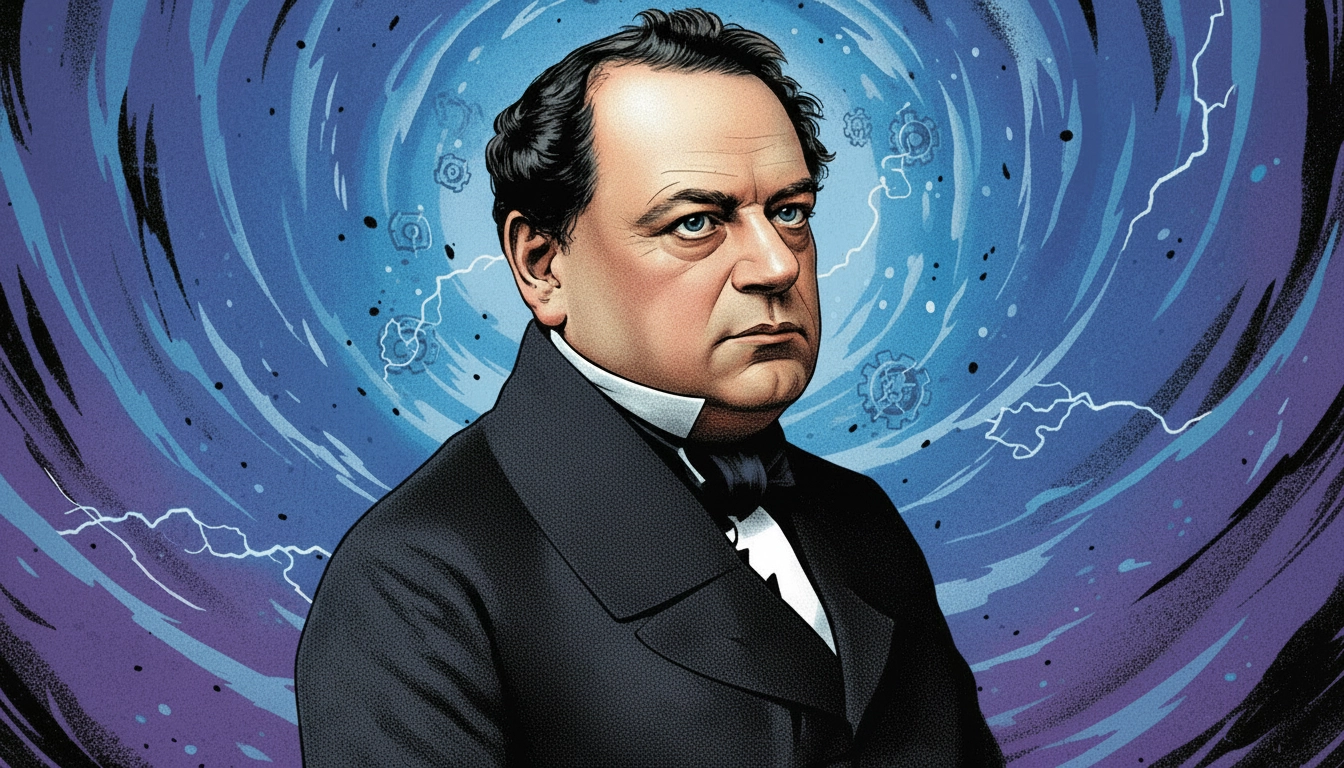
The Theory That Changed Electrical Engineering
In 1840, Moritz Hermann von Jacobi introduced what is now known as the Maximum Power Transfer Theorem, a principle stating that maximum power is transferred when the impedance of the load matches the impedance of the source. While elegant in theory, it remained largely impractical for real-world electrical networks for more than a century.
The problem wasn’t the math—it was the technology.
Why Jacobi’s Law Couldn’t Be Applied Until Now
Electrical systems are dynamic. Loads constantly change, harmonics distort waveforms, and reactive power introduces inefficiencies. Applying Jacobi’s Law in real time requires:
- Continuous measurement of voltage and current
- Instantaneous adjustment of network impedance
- High-speed processing at the waveform level
These requirements simply weren’t achievable until modern solid-state electronics and microprocessors became available.
How PMCS Turned Theory Into Reality
PMCS leveraged modern microchip technology and proprietary algorithms to dynamically match source and load impedance in real time. The result is the Maximum Power Transfer Solution (MPTS)—a system that reduces waste, improves power factor, and optimizes energy efficiency across entire electrical networks.
Why It Matters Today
As global energy demand rises, efficiency—not generation—is the fastest way to relieve grid strain. PMCS doesn’t just revisit a 19th-century theory—it operationalizes it for the modern energy landscape.