
Author: PMCS

  • AI Is Forcing a Reckoning in Energy and It’s Happening Faster Than Anyone Planned

    AI Is Forcing a Reckoning in Energy and It’s Happening Faster Than Anyone Planned

    For years, Big Tech told a reassuring story about the future of energy: AI would scale on clean power.
    Solar. Wind. Batteries. A smooth, inevitable transition.

    That story just collided with reality.

    According to Reuters Events (December 11, 2025), the companies building the world’s largest AI models and data centers are no longer betting on a single energy solution. Instead, they are quietly — and rapidly — adopting what executives now describe as an “all-of-the-above” power strategy: renewables plus natural gas plus nuclear.

    Not because they want to — but because they have to.


    The AI Power Problem No One Can Ignore

    AI data centers are not like traditional industrial loads. They don’t power down at night. They don’t tolerate intermittency. And they can’t wait a decade for grid upgrades.

    They need:

    • Massive power
    • 24/7 reliability
    • Immediate availability

    That combination is breaking assumptions across the energy sector.

    The International Energy Agency reports that natural gas–fired plants are already the largest source of power for U.S. data centers, and that this will remain true through at least 2030 — not because gas is “preferred,” but because it is dispatchable and fast to deploy.

    Clean power will play a larger role later, the IEA says — once grid constraints, permitting delays, and capacity build-out catch up. But AI is not waiting.


    The Scale Is Staggering

    According to S&P Global, utility power supplied to U.S. data centers will jump 22% in a single year, reaching 61.8 gigawatts in 2025, and is projected to more than double to 134.4 GW by 2030.

    That growth curve is unprecedented.

    Utilities are responding the only way they realistically can:

    • Building new gas-fired generation for reliability
    • Expanding renewables where possible
    • Looking to nuclear for long-term baseload stability

    Dominion Energy, which serves Northern Virginia’s “data center alley,” reported that 44% of its generation mix was natural gas in 2024, even as it plans to add 47 GW of new generation and storage over the next two decades — roughly 80% carbon-free.

    Entergy, serving four South Central states, has announced more than 19 GW of new natural gas capacity, while also advancing solar projects and building new gas plants specifically to power Meta’s Hyperion data center in Louisiana, according to Entergy’s Chief Customer Officer.


    Big Tech’s Quiet Pivot

    The most telling shift isn’t coming from utilities — it’s coming from the tech giants themselves.

    Companies like Meta, Microsoft, Google, and Amazon Web Services have been among the world’s largest buyers of renewable energy for years.

    That hasn’t changed.

    What has changed is the timeline.

    Meta’s Global Head of Energy told Reuters Events that the company is now working with utilities to bring “all forms of power” onto the grid, with a focus on what can be built fastest. Microsoft, despite committing to match all electricity use with zero-carbon energy by 2030, is sourcing power for new data centers from utilities planning additional natural gas plants.

    Google, which has matched 100% of its global electricity consumption with renewables since 2017, is now supporting:

    • Nuclear plant restarts
    • Life extensions of existing reactors
    • Small Modular Reactors (SMRs)
    • Even early-stage fusion partnerships

    In October 2024, Google signed a 25-year power purchase agreement for a nuclear facility in Iowa expected to return online in 2029. In 2025, it expanded its nuclear strategy further, backing both SMRs and fusion as future solutions.

    This is not a retreat from clean energy.
    It’s an admission that clean energy alone cannot scale fast enough to power AI right now.


    Renewables Are Still Growing — But Not Fast Enough

    The U.S. Energy Information Administration projects a record 33 GW of new utility-scale solar in 2025, and nearly 200 GW of solar capacity added between 2025 and 2030.

    Yet even this historic build-out faces headwinds:

    • Grid interconnection backlogs
    • Permitting delays
    • Increased federal oversight
    • Local opposition
    • And the phase-out of key tax credits after 2027

    As Michael Thomas of Cleanview told Reuters Events, solar, wind, and batteries can get us much of the way there — but barriers are slowing deployment at exactly the wrong moment.


    The Nuclear Revival Is No Longer Theoretical

    Perhaps the most surprising outcome of the AI boom is the acceleration of nuclear energy — not as a future concept, but as a near-term necessity.

    Big Tech is now actively:

    • Funding reactor restarts
    • Extending the life of existing plants
    • Signing long-term nuclear PPAs
    • Backing SMR developers
    • Laying groundwork for fusion in the 2030s

    As Google’s Head of Advanced Energy put it:
    “In the near term, life extensions, restarts and upratings will have the most impact.”

    That statement alone would have sounded unthinkable a decade ago.


    The Uncomfortable Truth

    AI is exposing a hard truth the energy industry has danced around for years:

    We do not have the power capacity we thought we had.

    Not fast enough.
    Not reliably enough.
    Not at the scale demanded by always-on digital infrastructure.

    And building new generation — of any kind — takes time, capital, permits, and political will.

    Which brings us to the question few are asking loudly enough.


    If We Can’t Produce Enough Power Fast Enough — What Do We Do?

    If generation can’t scale overnight, efficiency becomes the fastest lever available.

    Not symbolic efficiency.
    Not marginal savings.

    But real, measurable capacity recovery inside existing electrical infrastructure.

    Across the grid today, enormous amounts of power are lost, distorted, or underutilized — through reactive power, poor power factor, unnecessary current draw, and inefficiencies that rarely make headlines but quietly constrain capacity.

    When AI demand surges, these inefficiencies stop being academic.
    They become limiting factors.

    The emerging reality is this:

    The AI era won’t be powered by generation alone. It will be powered by optimization.

    Before we build more plants.
    Before we widen transmission corridors.
    Before we wait on permits.

    We have to extract more usable power from what already exists.

    Because the shock isn’t that Big Tech is turning to gas and nuclear.
    The shock is how quickly AI has forced everyone to admit the grid was already stretched thin.

    And that realization is only just beginning.


    Source: Reuters Events / Thomson Reuters, December 11, 2025. Data from International Energy Agency (IEA), U.S. Energy Information Administration (EIA), S&P Global.

  • Case Study: A Higher Power –  How Casas Church Cut HVAC Energy Demand by 50%

    Case Study: A Higher Power – How Casas Church Cut HVAC Energy Demand by 50%

    Organization Overview

    Casas Church is a large and active community church located in Tucson, Arizona. With expansive facilities and year-round HVAC demands driven by the desert climate, energy efficiency plays a critical role in managing operational costs while maintaining a comfortable environment for congregants and staff.

    Committed to responsible stewardship and long-term sustainability, Casas Church began exploring advanced solutions to reduce unnecessary energy waste and improve the performance of its electrical systems.


    The Challenge

    An analysis of the church’s HVAC chiller revealed significant inefficiencies:

    • Current draw of 129 amps
    • Power factor between 44% and 52%
    • Excessive reactive power and wasted demand
    • Higher-than-necessary utility and demand charges
    • Increased electrical and mechanical stress on HVAC equipment

    Despite consuming large amounts of electricity, only a fraction of that power was being converted into useful work. The remainder was lost due to poor power quality—driving up costs without improving performance.


    The Solution

    To address these inefficiencies, Casas Church deployed the PMCS Power Power Management Controls System on its HVAC chiller.

    Unlike passive monitoring tools, the PMCS system actively optimized the electrical performance of the chiller by:

    • Continuously correcting power factor
    • Reducing reactive power (kVAr)
    • Stabilizing electrical demand
    • Improving overall power quality in real time

    The installation and commissioning process was seamless and required no interruption to church operations—an essential requirement for a high-traffic community facility.


    The Results

    The impact was immediate and measurable.

    After installation, Casas Church achieved:

    • 50% reduction in energy demand
    • Significantly improved power factor
    • Lower monthly electricity and demand charges
    • Reduced electrical and mechanical stress on HVAC components
    • Improved system reliability and longevity

    By eliminating wasted power rather than adding new infrastructure, the church was able to unlock savings using the energy it was already paying for.


    Key Performance Metrics

    MetricBefore PMCS PowerAfter PMCS PowerImprovement
    Current Draw129 AmpsReduced & OptimizedLower Demand
    Power Factor44–52%Significantly ImprovedHigher Efficiency
    Energy DemandHigh50% ReductionMajor Cost Savings

    What the Customer Says

    “The installation of the PMCS Power system significantly reduced energy demand while ensuring efficient operation of our HVAC system.”


    Why This Matters

    Casas Church’s success highlights a critical truth about energy efficiency:

    You don’t always need more power—you need better power.

    By improving how electricity is used rather than how much is produced, PMCS Power delivers immediate, verifiable savings without waiting years for infrastructure upgrades or regulatory changes.

    This project now serves as a model for:

    • Churches and community facilities
    • Commercial buildings
    • Schools and campuses
    • Data centers and mission-critical HVAC environments
  • Energy Prices Are Now a White House Priority — But the Fastest Fix Isn’t on the Agenda

    Energy Prices Are Now a White House Priority — But the Fastest Fix Isn’t on the Agenda

    In early December, senior officials across the federal government were directed to assemble a comprehensive briefing on energy affordability — a clear signal that lowering electricity and fuel costs has become a top priority for the Trump administration as economic pressure mounts and midterm elections approach.

    According to reporting by POLITICO, the briefing was delivered to Donald Trump and Chief of Staff Susie Wiles by Energy Secretary Chris Wright, Interior Secretary Doug Burgum, and Jarrod Agen, executive director of the White House’s National Energy Dominance Council.

    The presentation outlined a broad strategy to bring down energy costs — ranging from rolling back appliance efficiency standards to accelerating power generation, easing grid constraints, and reducing regulatory compliance costs. Notes obtained by POLITICO indicate the administration is pursuing both incremental measures and large-scale infrastructure actions to increase energy supply and stabilize prices.

    This approach reflects President Trump’s long-held belief that energy abundance leads directly to affordability. The administration frequently points to gasoline prices — currently hovering around $2.80 per gallon — as evidence that increased domestic energy production can ease household financial pressure.

    “Every week you fill up your gas tank, you got more money in your pocket to buy your kids presents and pay your bills,” Energy Secretary Chris Wright said in a December interview with FOX Business. “This is what happens when the American public elects a president who cares about their pocketbook.”

    White House spokesperson Taylor Rogers reinforced that message, stating that lowering energy prices for American families and businesses is a top administration priority, emphasizing that affordable energy underpins everything from manufacturing to home heating and daily commutes.

    Beyond consumer appliances, the administration has invoked emergency authorities to prevent the retirement of power plants deemed critical to grid reliability, reversed several Biden-era energy policies viewed as cost drivers, and moved to withdraw from a memorandum related to the Snake River hydroelectric dams — a decision the White House estimates could save between $400 million and $800 million.

    The Challenge Officials Quietly Acknowledge

    Despite the aggressive focus, administration officials privately concede — and independent experts confirm — that reducing electricity prices is inherently slow and difficult. Power bills are shaped by complex factors including aging infrastructure, fuel volatility, extreme weather, and long utility investment cycles. Even major policy shifts can take years to translate into noticeable savings for consumers.

    Which raises a critical question:

    What if there were a way to lower energy costs without waiting years for new power plants, grid upgrades, or regulatory reform?

    That question leads directly to what’s missing from the national conversation — how efficiently the electricity we already generate is being used.

    Across the U.S. electrical system — especially in industrial facilities, data centers, hospitals, utilities, and large commercial buildings — a significant portion of electricity is lost to what engineers call poor power quality:

    • Harmonic distortion
    • Reactive power (kVAr)
    • Low power factor
    • Phase imbalance
    • Electrical noise and inefficiency

    The result is simple but costly: only a portion of the power being generated is doing useful work. The rest becomes heat, vibration, stress on equipment, and wasted capacity.

    This inefficiency forces:

    • Higher generation demand
    • Larger infrastructure investments
    • Higher utility rates passed to consumers

    In other words, we’re paying to produce power we never fully use.

    Why Generation Alone Won’t Fix the Problem

    The administration’s focus on energy abundance assumes that more supply automatically equals lower prices. But the grid doesn’t work that way.

    Even with additional generation:

    • Transmission constraints remain
    • Infrastructure upgrades take years
    • Utilities recover costs through rate increases
    • Extreme weather continues to drive volatility

    Meanwhile, energy demand is accelerating — particularly from AI data centers, electrification, and industrial growth.

    Without improving how efficiently power is consumed, the system remains fundamentally leaky.

    Where PMCS Power Fits In

    PMCS Power addresses the energy crisis from the inside out.

    Instead of producing more electricity, PMCS focuses on maximizing the usable power already flowing through existing systems.

    What Makes PMCS Different

    PMCS Power is the only solution that continuously:

    • Measures and reports kVA, kW, kVAr, Power Factor, and energy use
    • Across all three phases
    • 24/7, in real time
    • At extremely high sampling rates (over 20,000 times per second)

    But measurement is only the beginning.

    Unlike passive meters or monitoring tools, PMCS systems:

    1. Read and report power quality
    2. Actively restore and optimize electrical performance
    3. Verify results continuously, proving real savings

    This closed-loop approach allows facilities to use more of the power they’re already paying for — immediately.

    Immediate Impact, Not Long-Term Promises

    Unlike grid-scale projects that take years to influence consumer bills, PMCS deployments can:

    • Reduce wasted energy immediately
    • Improve power factor and system efficiency
    • Lower peak demand
    • Reduce strain on transformers and equipment
    • Extend asset life
    • Cut operating costs without operational disruption

    For utilities, data centers, manufacturers, and critical infrastructure, this translates into real, verifiable reductions in energy waste — without waiting for new generation or regulatory reform.

    A National Opportunity Hiding in Plain Sight

    If deployed at scale, power optimization technologies like PMCS could:

    • Reduce national electricity demand without reducing output
    • Free up existing grid capacity
    • Lower operational costs for businesses
    • Reduce pressure on utilities and regulators
    • Improve reliability during peak demand events

    In a moment where policymakers are searching for ways to lower energy prices, strengthen the grid, and support economic growth, using power more efficiently may be the fastest lever available.

    The U.S. doesn’t just have an energy production problem — it has an energy utilization problem.

    While debates continue around generation, regulation, and fuel mix, massive amounts of electricity are being lost every second inside the system itself.

    PMCS Power offers a proven, deployable way to:

    • Capture that lost value
    • Improve efficiency immediately
    • Reduce costs without new infrastructure

    In an energy-constrained world, the cheapest kilowatt is the one you stop wasting.

  • The 160-Year Problem: Why Jacobi’s Law Took Modern Technology to Solve

    The 160-Year Problem: Why Jacobi’s Law Took Modern Technology to Solve

    The Theory That Changed Electrical Engineering

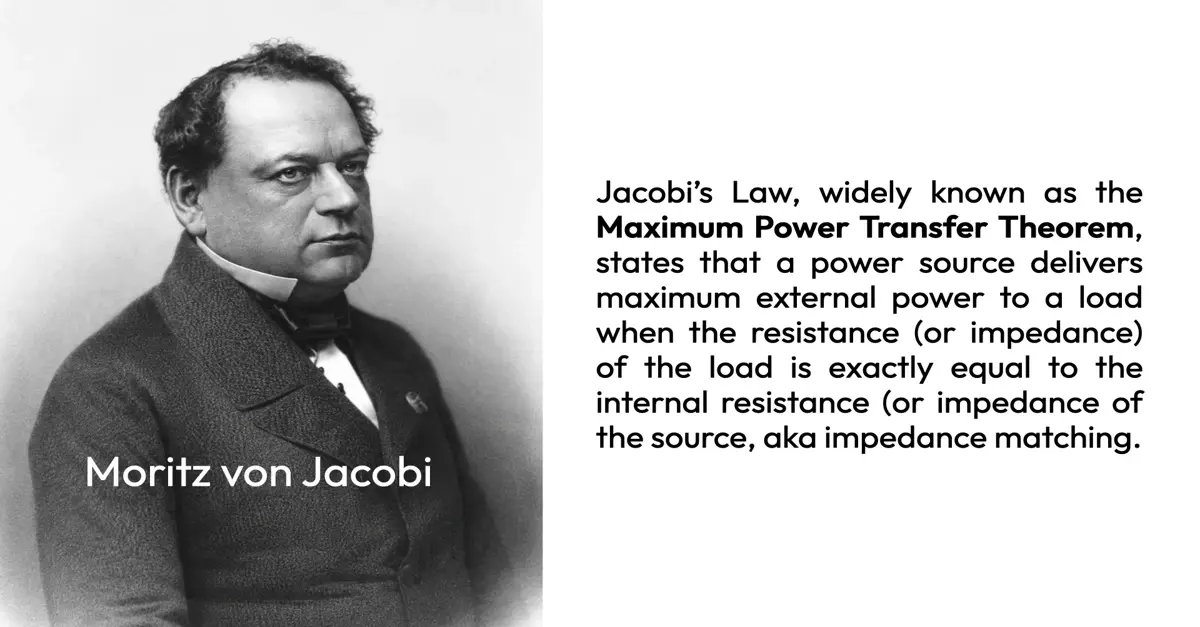
    In 1840, Moritz Hermann von Jacobi introduced what is now known as the Maximum Power Transfer Theorem, a principle stating that maximum power is transferred when the impedance of the load matches the impedance of the source. While elegant in theory, it remained largely impractical for real-world electrical networks for more than a century.

    The problem wasn’t the math—it was the technology.

    Why Jacobi’s Law Couldn’t Be Applied Until Now

    Electrical systems are dynamic. Loads constantly change, harmonics distort waveforms, and reactive power introduces inefficiencies. Applying Jacobi’s Law in real time requires:

    • Continuous measurement of voltage and current
    • Instantaneous adjustment of network impedance
    • High-speed processing at the waveform level

    These requirements simply weren’t achievable until modern solid-state electronics and microprocessors became available.

    How PMCS Turned Theory Into Reality

    PMCS leveraged modern microchip technology and proprietary algorithms to dynamically match source and load impedance in real time. The result is the Maximum Power Transfer Solution (MPTS)—a system that reduces waste, improves power factor, and optimizes energy efficiency across entire electrical networks.

    Why It Matters Today

    As global energy demand rises, efficiency—not generation—is the fastest way to relieve grid strain. PMCS doesn’t just revisit a 19th-century theory—it operationalizes it for the modern energy landscape.

  • Caste Study: From Certification to Customer – Why Underwriters Laboratories Tested PMCS

    Caste Study: From Certification to Customer – Why Underwriters Laboratories Tested PMCS

    Why Certification Matters in Power Management

    In the energy sector, claims require proof. Certification from organizations like Underwriters Laboratories (UL) is one of the most rigorous validation processes in the industry.

    The UL Testing Process

    UL required two units of each of PMCS’s eight MPTS models—16 systems in total—to undergo extensive testing. Over nine months, UL evaluated:

    • Power quality improvements
    • Current and demand reduction
    • Power factor correction
    • System reliability across configurations

    What Happened After Certification

    Following approval, UL acquired an MPTS unit for ongoing benchmarking. It is now used internally for comparative testing against other power technologies—a rare endorsement that speaks to PMCS’s performance consistency.

    What This Means for Customers

    UL certification confirms that PMCS delivers measurable, repeatable improvements under real operating conditions. For facilities, utilities, and institutions, this validation reduces adoption risk and reinforces long-term confidence.

  • Case Study: A Tale of Two Schools –  What an 18-Month Energy Study Revealed

    Case Study: A Tale of Two Schools – What an 18-Month Energy Study Revealed

    The Ideal Real-World Test

    Douglas County School District in Colorado provided a rare opportunity: two nearly identical high schools, located just two miles apart, with similar:

    • Square footage
    • Student populations
    • Mechanical systems
    • Operating schedules

    One school installed PMCS. The other did not.

    What the Data Showed

    Over 18 months, utility-provided data revealed:

    • 14.5% reduction in peak kW demand
    • 8.28% reduction in total kWh consumption
    • Improved power quality across HVAC, lighting, and mechanical systems

    Why This Case Study Matters

    Unlike short trials or simulations, this long-term comparison eliminated variables. The results confirmed PMCS delivers sustained, verifiable efficiency gains in real facilities—not just controlled environments.

  • Why Power Factor and Harmonics Are Costing You More Than You Think

    Why Power Factor and Harmonics Are Costing You More Than You Think

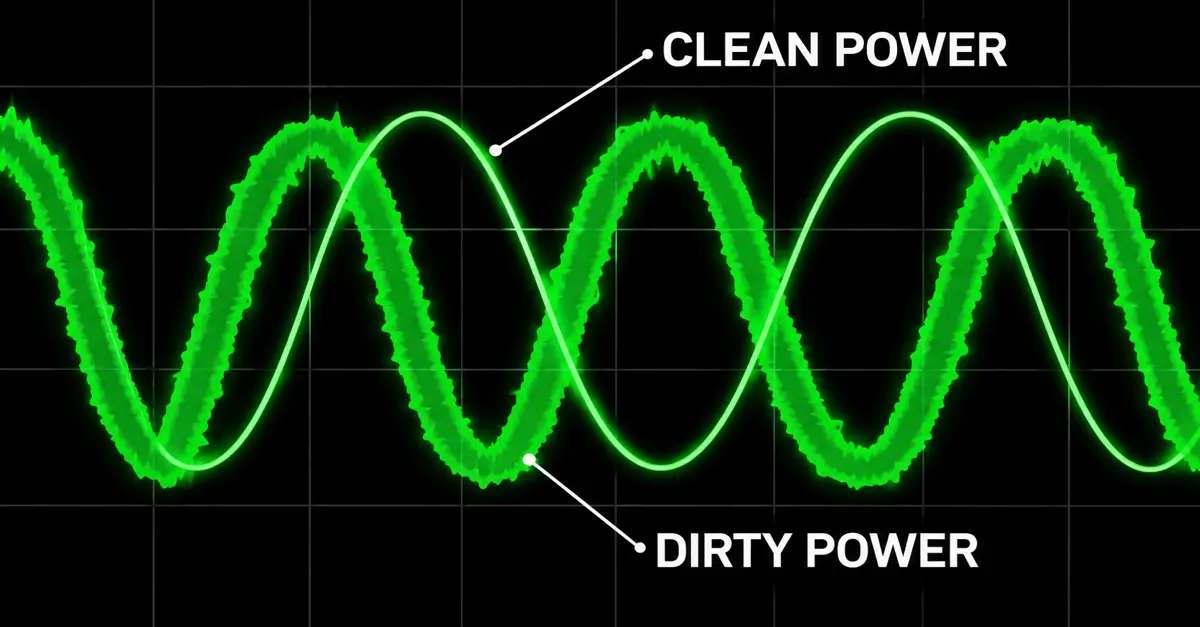
    The Hidden Cost of “Dirty Power”

    Most facilities track kilowatt-hours, but few understand the financial impact of:

    • Reactive power (kVAr)
    • Harmonic distortion (THD)
    • Excess current and heat

    These inefficiencies increase demand charges, reduce equipment life, and strain electrical infrastructure.

    Why Traditional Solutions Aren’t Enough

    Capacitor banks and harmonic filters address symptoms, not systems. They are static, load-specific, and often introduce maintenance challenges.

    The PMCS Approach

    PMCS dynamically manages the entire electrical network in real time, reducing reactive power by up to 90% and consistently achieving power factor levels of 0.95–0.99—without capacitor banks.

  • The Global Energy Crisis Isn’t About Shortage—It’s About Waste

    The Global Energy Crisis Isn’t About Shortage—It’s About Waste

    Energy Waste Is the Real Crisis

    From utilities to industrial facilities, massive amounts of generated power never become useful work. Losses from reactive power, harmonics, and inefficient demand management quietly consume capacity.

    Why Efficiency Beats New Generation

    Building new power plants takes years. Improving efficiency delivers immediate results. PMCS reduces demand at the source, freeing capacity without new infrastructure.

    A Faster Path to Sustainability

    By reducing waste, PMCS lowers emissions, stabilizes grids, and helps organizations meet sustainability goals without offsets or operational changes.

  • The Future of Power Management: From Static Correction to Intelligent Systems

    The Future of Power Management: From Static Correction to Intelligent Systems

    From Correction to Intelligence

    Electrical networks are becoming more complex. Static correction methods can’t keep up with dynamic loads, renewables, and distributed generation.

    The Role of Intelligent Systems

    PMCS already uses advanced electronics and algorithms to optimize power in real time. Future enhancements—including AI-driven prediction—will further improve efficiency and resilience.

    What Comes Next

    The future of power isn’t just generation—it’s intelligence. PMCS is positioned to lead that transformation.

  • Why Electrical Capacity Is the New Bottleneck—and How Facilities Can Solve It Without Upgrades

    Why Electrical Capacity Is the New Bottleneck—and How Facilities Can Solve It Without Upgrades

    Electrical Capacity Is the Real Limiting Factor

    Across commercial, industrial, and institutional facilities, electrical capacity is becoming a critical bottleneck. While power generation continues to expand, the ability of existing infrastructure—transformers, panels, switchgear, and feeders—to support new loads is increasingly limited.

    From EV charging and electrification initiatives to data centers and HVAC upgrades, demand is rising faster than infrastructure can be expanded.

    Why Traditional Upgrades Are Expensive and Slow

    When facilities hit capacity limits, the default response is infrastructure expansion:

    • Larger transformers
    • New service feeds
    • Utility coordination
    • Construction downtime

    These projects are costly, disruptive, and often take months or years to complete. In many cases, facilities are forced to delay growth or defer sustainability initiatives simply because the electrical system cannot support additional load.

    The Hidden Truth: Most Facilities Already Have Untapped Capacity

    What many organizations don’t realize is that electrical capacity is often wasted, not fully utilized. Excess current, poor power factor, harmonic distortion, and reactive power inflate kVA demand without delivering useful work.

    In other words, facilities appear “maxed out” on paper—but in reality, a significant portion of their electrical capacity is being consumed by inefficiency.

    How PMCS Unlocks Capacity Without Infrastructure Changes

    PMCS addresses capacity constraints by reducing the electrical waste that inflates demand. By dynamically matching source and load impedance in real time, the PMCS Maximum Power Transfer Solution (MPTS) lowers:

    • Line current
    • kVA and kVAr demand
    • Peak load conditions

    This releases up to 20% of hidden electrical capacity, allowing facilities to add new loads, downsize backup generation, or export excess power—without replacing transformers or upgrading service connections.

    Capacity Relief That Scales With Demand

    Unlike static solutions, PMCS adapts continuously as loads change. Whether a facility is adding EV chargers, expanding operations, or integrating renewable energy, MPTS ensures the existing electrical network operates as efficiently as possible.

    This makes PMCS not just an efficiency tool, but a strategic capacity solution for modern electrification challenges.

    A Smarter Path Forward

    As energy demand continues to rise, solving capacity constraints will require more than building new infrastructure. The fastest, most cost-effective solution is to eliminate waste first.

    PMCS enables facilities to do exactly that—turning efficiency into available capacity and helping organizations grow without delay.

Click to talk