


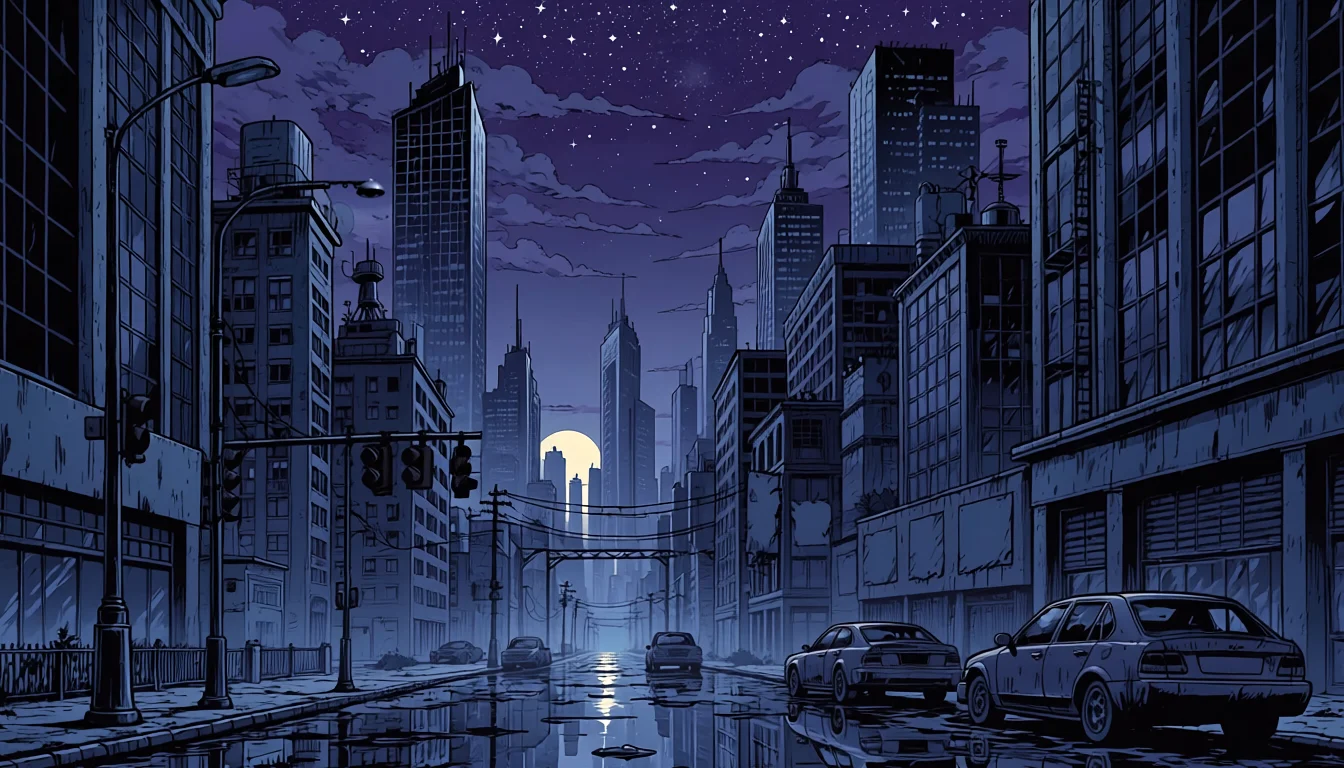
There is a growing assumption that the digital world is limitless.
More data, more AI, more automation, more electrification.
What Blackout Earth makes clear is that none of it is limitless. It all runs on infrastructure that is being pushed closer to its limits every year.
This is not a book about artificial intelligence alone. It is a book about the systems that make modern life possible, and what happens when those systems begin to strain.
1. The Grid Is More Fragile Than Most People Realize
Electricity is often treated as a given. Flip a switch and it works.
What the book reveals is that the grid operates in constant balance. Supply and demand must match in real time. Even small disruptions can cascade into much larger failures.
The system does not break all at once. It weakens, adapts, and then fails in moments that often go unseen.
2. South Africa Is Not an Exception
One of the most striking sections of the book looks at South Africa’s long-running power crisis.
Rolling blackouts were not caused by a single event. They were the result of demand growing faster than infrastructure.
The deeper insight is what followed.
When power became unreliable, water systems began to fail as well. Pumps stopped. pressure dropped. access became inconsistent.
Electricity is not just about lights. It is upstream of water, health, and daily life.
3. The Biggest Energy Consumers Are Invisible
The fastest growing demand for electricity is no longer industrial in the traditional sense.
It comes from:
- Data centers
- Cloud computing
- Streaming
- Artificial intelligence
These systems do not shut down at night. They operate continuously and at massive scale.
A single large data center can consume as much power as tens of thousands of homes. Multiply that globally and the demand becomes difficult to ignore.
4. Artificial Intelligence Changes the Equation
AI is not just another layer of demand. It accelerates everything.
Training models requires sustained, high-intensity power. Running them at scale creates constant global load.
Unlike traditional industries, these workloads are not flexible. They do not pause when the grid is under stress.
That changes how the entire system behaves.
5. Electrification Is Concentrating Demand
The push toward electrification is necessary, but it comes with consequences.
Electric vehicles, electric heating, and industrial electrification are all moving demand onto the same system.
Instead of spreading energy use across fuels, everything converges on the grid.
This creates synchronized demand patterns that infrastructure was not designed to handle.
6. The Crisis Will Not Look Like a Single Blackout
One of the more important takeaways is how this plays out.
It is unlikely to be one dramatic global failure.
It is more likely to be:
- Regional constraints
- Rolling outages
- Rising costs
- Uneven reliability
In other words, a gradual shift where electricity becomes less predictable and more expensive.
7. The Most Overlooked Problem Is Waste
The book does not just focus on supply.
It highlights how much energy is lost through inefficiency, poor power quality, and system design.
In some cases, a significant portion of electricity never does useful work.
Improving efficiency may be one of the fastest ways to relieve pressure on the grid.
Final Thought
Blackout Earth does not argue that technology is the problem.
It argues that scale without awareness is.
The systems supporting modern life were built for a different era. The question is whether they can adapt fast enough to support what comes next.
Read the Full Book
If you want the full breakdown, including global scenarios, infrastructure constraints, and what happens over the next 5, 10, and 20 years:
You can view or purchase the book here:
https://www.amazon.com/Blackout-Earth-Will-Lights-Water-ebook/dp/B0GTFWBF6B/